Choosing between Elmhurst and Hinsdale can feel harder than it should. Both are well-known western suburbs with rail access to Chicago, established downtown areas, and strong owner-occupied housing markets, but they do not live the same day to day. If you are trying to decide where your budget, commute, and housing goals line up best, this side-by-side guide will help you focus on what matters most. Let’s dive in.
Elmhurst vs. Hinsdale at a glance
If you want the short version, Elmhurst usually offers more housing variety and a lower price point, while Hinsdale is generally more oriented toward larger detached homes and a higher entry price. Both communities offer direct Metra service into Chicago and active downtown districts, but the feel and decision points differ.
For many buyers, the real question is not which suburb is "better." It is which suburb fits your stage of life, preferred home type, and comfort level with pricing. That is where the differences become clear.
Home prices and housing options
Elmhurst and Hinsdale sit in very different price tiers. Zillow lists Elmhurst’s average home value at $613,207, with a latest median sale price of $554,250. In Hinsdale, Zillow places average home value at $1,244,308, and Redfin reports a March 2026 median sale price of $1.7 million.
Census QuickFacts shows a similar gap in owner-occupied home values. Elmhurst’s 2019-2023 median owner-occupied value is $545,400, compared with $1,053,700 in Hinsdale. If you are comparing affordability and entry point alone, Elmhurst typically gives you more flexibility.
The housing mix also matters. CMAP data shows Elmhurst is 72.9% single-family detached, with 16.5% of housing in buildings with 20 or more units. Hinsdale is 83.0% single-family detached, with only 6.2% in 20+ unit buildings.
In practical terms, that means Elmhurst tends to offer a broader mix of housing types, while Hinsdale leans more heavily toward detached single-family homes. If you want more options across different price bands or are thinking about downsizing without leaving the western suburbs, Elmhurst may give you a wider search.
What the housing stock feels like
Elmhurst’s median year built is 1964, while Hinsdale’s is 1979, based on CMAP snapshots. That does not tell you everything about condition or style, but it does give useful context about the age of the housing stock in each market.
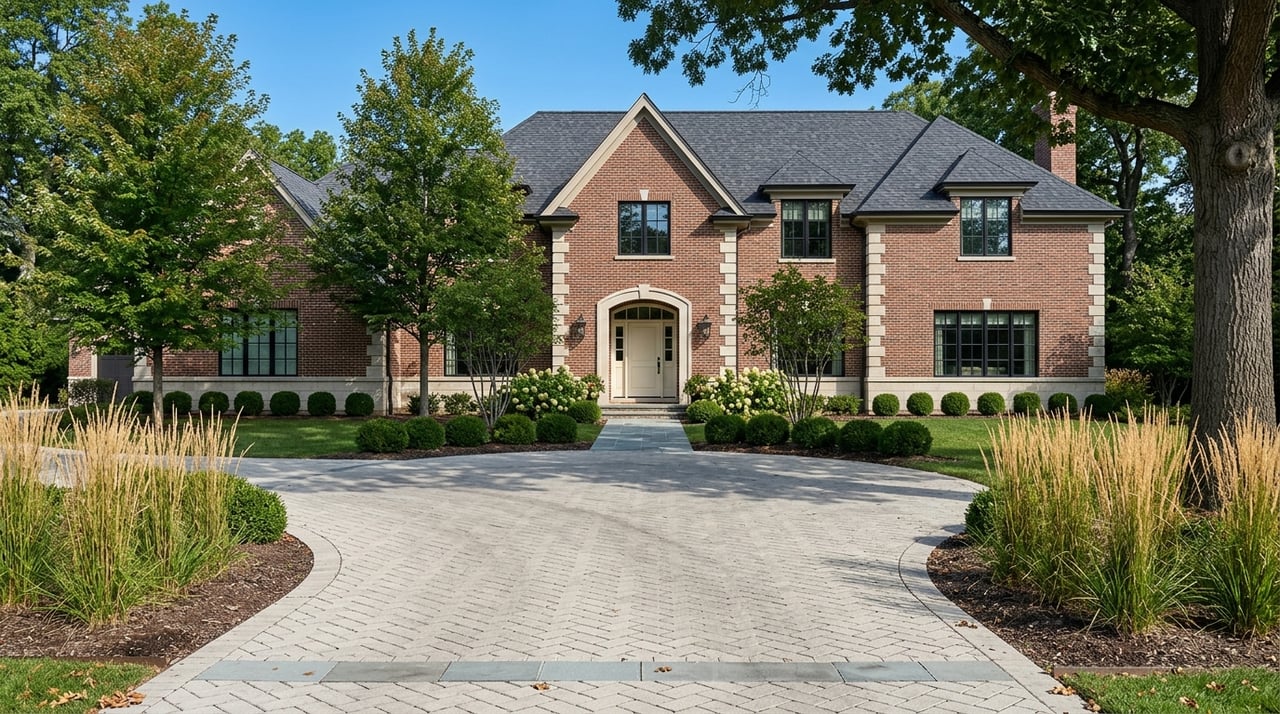
For many buyers, Elmhurst feels more flexible in terms of home types and price points. Hinsdale tends to feel more concentrated around larger detached homes and higher-end inventory. If you are a move-up or luxury buyer, Hinsdale often aligns more naturally with that search.
School structure and decision-making
For buyers focused on public schools, the biggest difference is structure. Elmhurst CUSD 205 is one unified K-12 system serving more than 8,400 students across an early childhood center, eight elementary schools, three middle schools, one high school, and a transition center.
The district states that all D205 schools were rated Exemplary or Commendable on the 2025 Illinois State Report Card. From a practical standpoint, Elmhurst can feel simpler because you are evaluating one district pathway from elementary through high school.
Hinsdale’s public school path is split. District 181 covers preschool, seven elementary schools, and two middle schools, while Hinsdale Township High School District 86 serves the high school level through Hinsdale Central and Hinsdale South.
District 181 highlights 11 National Blue Ribbon Awards, including 2025 awards for Clarendon Hills Middle School and Walker Elementary School. District 86 says Hinsdale Central and Hinsdale South offer a comprehensive curriculum and a wide variety of courses.
What this means for buyers
If you value a more streamlined district decision, Elmhurst may feel easier to navigate. If you are comfortable reviewing both a K-8 district and a high school district, Hinsdale offers that two-step structure.
This is often less about one town being right for everyone and more about how you prefer to evaluate your options. Some buyers appreciate Elmhurst’s single-system simplicity. Others are very comfortable digging into Hinsdale’s split district model and long-established academic reputation.
Downtown lifestyle and daily convenience
Elmhurst offers a broader downtown experience. Its official visitor site describes a tree-lined community with retail shops, dining, theatre and art, museums, and year-round events. City Centre includes the 10-screen York Classic Cinemas theatre and is walkable to Elmhurst University, museums, and the public library.
Elmhurst also reports more than 100 dining options in town. The town’s Express Trolley connects downtown Elmhurst with the Spring Road district and York and Vallette, which suggests more than one active retail and dining area.
Hinsdale’s downtown is smaller and more concentrated. The Hinsdale Chamber highlights a farmers market that has run since 1977 and now brings more than 20 growers and food vendors on Mondays from June through October. The chamber also promotes downtown events such as the Fine Arts Festival, Uniquely Thursdays, and seasonal holiday décor.
If you like a downtown with multiple nodes and a wider mix of activity, Elmhurst may stand out. If you prefer a more boutique-style downtown core with a concentrated shopping and event feel, Hinsdale may be more your speed.
Lifestyle differences in simple terms
Elmhurst often appeals to buyers who want variety in both housing and day-to-day amenities. Hinsdale often appeals to buyers who want a more compact downtown experience paired with a housing market that skews higher-end.
Neither approach is better across the board. It depends on whether your routine leans more toward flexibility and variety or toward a more concentrated village-style experience.
Commute and Metra access
Both suburbs offer direct rail access to downtown Chicago, which is a major reason they stay high on buyers’ lists. Elmhurst is on Metra’s Union Pacific West line, with service to Ogilvie Transportation Center. The Elmhurst station page shows 1,487 parking spaces and Pace connections on routes 309 and 332.
Hinsdale is on Metra’s BNSF line, with service to Chicago Union Station. The Hinsdale station has 331 parking spaces, and nearby West Hinsdale adds another 156 spaces.
Census QuickFacts shows mean commute times of 29.1 minutes in Elmhurst and 31.6 minutes in Hinsdale. That is a modest difference, so for many buyers the bigger issue is not whether train access exists. It is how station parking, route preferences, and daily logistics fit your routine.
Which suburb feels easier for commuters?
On paper, Elmhurst has a parking advantage based on station supply and Pace connections. Hinsdale still offers direct rail convenience, but your personal experience may come down to where you live relative to the station and which line works better for your schedule.
If your weekday routine is tightly timed, small details matter. A suburb with the right station setup for your habits can feel more valuable than a suburb with a slightly different average commute time.
Ownership patterns and market feel
Owner occupancy is high in both communities, which supports a stable, established residential feel. Census QuickFacts reports owner occupancy at 79.9% in Elmhurst and 89.9% in Hinsdale.
That higher figure in Hinsdale aligns with a market that is more heavily owner occupied and often associated with longer-term residency. Elmhurst is also strongly owner occupied, but it reflects a bit more flexibility in housing types and market entry points.
For some buyers, that difference helps frame the overall vibe. Hinsdale may feel more tightly tied to long-term detached-home ownership, while Elmhurst may feel somewhat more mixed and adaptable.
Which suburb fits you best?
If you are comparing Elmhurst and Hinsdale seriously, start with your budget and ideal home type. That one step alone will often narrow the answer faster than anything else.
Elmhurst may be the better fit if you want:
- A lower price floor
- More housing variety
- A single K-12 public school district structure
- A broader downtown and dining mix
- Strong commuter convenience with larger station parking supply
Hinsdale may be the better fit if you want:
- A market centered more heavily on detached single-family homes
- A higher-end or luxury price point
- A more concentrated boutique-style downtown core
- A higher owner-occupancy profile
- A split K-8 and high school district structure you are comfortable evaluating
For many move-up buyers, Elmhurst offers flexibility without giving up west suburban convenience. For luxury and estate-minded buyers, Hinsdale’s price point and housing stock often make it the more natural match.
The best choice is the one that supports how you actually want to live, commute, and grow into the next chapter. If you want help comparing specific blocks, home styles, or on-market and private opportunities in Hinsdale and nearby western suburbs, Ginny Stewart can guide you with local insight and a boutique, high-touch approach.
FAQs
How do Elmhurst and Hinsdale home prices compare?
- Elmhurst generally has a lower price point, with Zillow reporting an average home value of $613,207, while Zillow reports $1,244,308 in Hinsdale and Redfin reports a March 2026 median sale price of $1.7 million in Hinsdale.
How do Elmhurst and Hinsdale public school structures differ?
- Elmhurst uses one unified K-12 district, CUSD 205, while Hinsdale’s public school path is split between District 181 for preschool through eighth grade and District 86 for high school.
Which suburb offers more housing variety, Elmhurst or Hinsdale?
- Elmhurst offers more variety in housing types based on CMAP data, while Hinsdale is more heavily weighted toward detached single-family homes.
How do Elmhurst and Hinsdale compare for commuting to Chicago?
- Both suburbs offer direct Metra service to Chicago, but Elmhurst has more station parking and Pace connections, while commute times are relatively close at 29.1 minutes in Elmhurst and 31.6 minutes in Hinsdale.
What is the difference between downtown Elmhurst and downtown Hinsdale?
- Elmhurst has a broader downtown and multiple retail and dining nodes, while Hinsdale has a smaller, more concentrated downtown with boutique shops, events, and a long-running farmers market.
Which suburb is better for luxury buyers, Elmhurst or Hinsdale?
- Hinsdale is often the more natural fit for luxury buyers because its housing stock and pricing are more concentrated in the higher-end detached single-family market.