La Grange will not ask you, at any point in a home sale, whether your sewer lateral has ever been inspected. There is no line for it on a disclosure form. No inspector is required to look at it. No transfer stamp gets held up over it. This isn't an oversight in the paperwork. It's a boundary the Village draws on purpose between what it owns and what you own, and understanding that boundary matters more in La Grange than in most western suburbs, because the Village's own records say the pipe running from your house was likely installed the same decade as the one running under the street.
That's the piece worth sitting with before you list a La Grange home or write an offer on one. The Village runs one of the more visible public infrastructure programs in this part of Cook County. It televises its mains, cleans them, and repairs deficient sections with cured-in-place lining that rebuilds a pipe from the inside without digging up the street. Watching that work happen, it's easy to assume someone is checking the pipes on your property too. Nobody is. Not the Village, not a state law, not a standard home inspection.
What the Village Actually Owns
The split is written plainly on the Village's own site. The property owner is responsible for the maintenance and repair of the sewer lateral from the building up to and including its connection to the Village's sewer system.
That single sentence is the whole story. The Village's camera trucks, its lining contracts, its engineering studies of the North and South drainage basins all stop at the property line. A permit is required if you need to repair your lateral, and routine work like rodding doesn't even need that. But nobody from the Village is coming to look at the pipe unless you call and ask, and even then, Public Works will televise it and consult with you rather than perform any repair.
Ninety Years Old, By the Village's Own Math
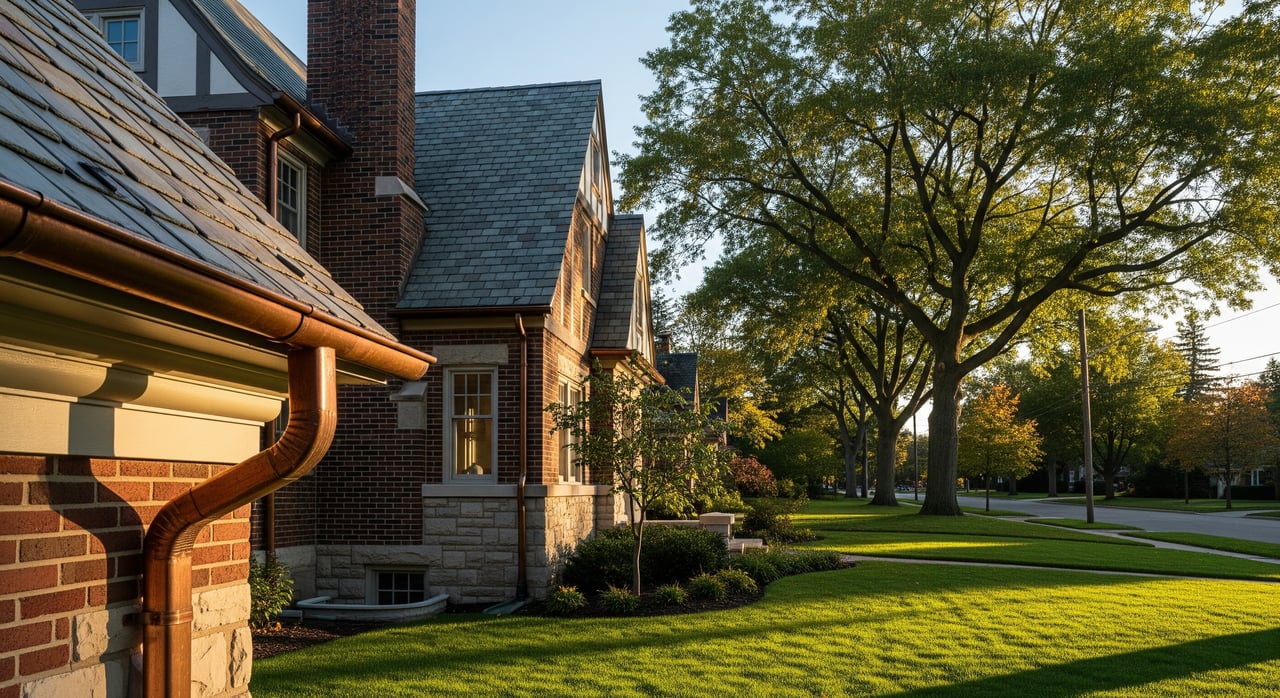
Here's where the age of La Grange's housing stock stops being a charming fact about tree-lined streets and starts being a due-diligence issue. A federal funding application submitted on the Village's behalf describes La Grange's sewer infrastructure as installed between 1920 and 1950, and identifies roughly 92,900 linear feet of pipe that needs evaluation and rehabilitation. That's the Village's own engineering consultants, in a formal request for federal money, confirming that the system serving La Grange's historic homes is somewhere between 75 and 100 years old.
The public main and your private lateral were very often laid in the same trench, by the same crew, in the same year. If the Village is telling the federal government its infrastructure needs work, that's useful context for what's likely sitting under your own yard, whether or not anyone has ever looked at it with a camera.
No Inspection, No Transfer Stamp, No Flag
In some parts of the country, a municipality won't let a sale close until the seller's sewer lateral has passed a camera inspection. La Grange isn't one of them. The Village's own FAQ is direct about it: no home inspection is required prior to the sale of a property, and transfer stamps are not required either. There's no point in a La Grange transaction where a government form makes anyone look at the pipe.
That means the only way a sewer lateral gets inspected during a sale is if a buyer, a seller, or an agent decides to order it. Nothing forces the issue. For a house built in the 1920s or 1930s, which is the norm in La Grange rather than the exception, that's a meaningful gap.
| Item | Required in a La Grange sale? | Who's responsible if it fails |
|---|---|---|
| Standard home inspection | No, buyer's choice | Buyer pays for it, seller has no obligation to allow findings to change anything |
| Sewer lateral camera scope | Never required, always an add-on | Whoever orders it pays for the scope; repair cost is negotiated |
| Village transfer stamp | Not required in La Grange | N/A |
| Public sewer main condition | Village's ongoing responsibility | Village, funded through its own capital program |
| Private lateral condition | Always the owner's responsibility | Property owner, full stop, unless negotiated otherwise in the contract |
The Five Days That Actually Matter
Illinois real estate contracts run on a short attorney review and inspection contingency period, typically about five business days after a contract is signed. That window is where a buyer's leverage actually lives, and it's the only place a sewer lateral issue in La Grange gets surfaced before closing rather than after.
Standard home inspections don't include the sewer line. It's underground, it's not visible, and it falls outside what a general inspector is scoped to check. A sewer scope is a separate camera inspection a buyer has to specifically request and pay for, typically in the range of $150 to $400 in the Chicago area. Compare that to what happens if nobody looks. Root intrusion in an aging clay lateral, the single most common finding in homes this old, usually runs $300 to $1,000 to clear. A cracked joint or an offset section that needs spot repair or lining runs $3,500 to $12,000. A full lateral replacement, if the pipe has collapsed or bellied badly enough, can push past $25,000 depending on depth and what's sitting on top of it.
The math only works in a buyer's favor if the scope happens inside that five-day window, while there's still a contract to renegotiate. Once the deal closes, a failed lateral stops being a negotiation and becomes a bill.
The Basement Drain That Isn't What It Looks Like
One pattern specific to La Grange's older housing stock is worth knowing even if you never order a scope. In a lot of pre-1960 homes here, the kitchen drain doesn't run straight to the main lateral. It first passes through an outdoor catch basin, often thirty to fifty feet from the house, before joining the line that continues to the Village's sewer. Homeowners who get a recurring kitchen backup often assume it's an interior clog and pay for the same interior rodding service year after year, when the real blockage, usually grease buildup, is sitting in an outdoor basin nobody's checked.
If you're buying a La Grange home built before 1960 and the seller mentions a slow kitchen drain or an old service history with a plumber, it's worth asking specifically whether that outdoor catch basin has ever been located and cleaned. It's a five-minute question that can save a lot of repeat service calls.
One Grant Worth Knowing About Before You List
If you're planning to sell and you've had any history of sewer backups, the Village's Sewer Backup Prevention Grant is worth using before you list rather than discovering it after a buyer's inspector flags standing water in the basement. The program reimburses 50% of eligible costs, capped at $3,000 for a backflow device or $5,000 for an overhead sewer conversion, and permit fees for the funded work are waived. It runs on a first-come, first-served basis starting May 1 each year, and the funding period closes April 30, so timing matters if you're aiming to fix something before a spring listing.
Eligibility comes with a condition worth knowing: the Village requires disconnecting any downspout or sump pump connection to the combined sewer system before it will reimburse the work. The program exists because La Grange's combined sewer system, which carries both sanitary waste and stormwater, can back up into homes during heavy rain, and the Village has been serious enough about the problem that Cook County contributed $325,000 in American Rescue Plan funding to it back in 2023. That was a one-time boost rather than an annual figure, but it says something about how the Village views the risk on its older blocks.
For a seller, using this grant to fix a known backup issue before listing turns a defensible negotiation point into a solved problem. For a buyer, asking whether a seller has ever used it, or ever needed to, is a fair and specific question that goes well beyond what a standard disclosure form will tell you.
A Few Questions Worth Asking Directly
Does La Grange require a sewer inspection before I can sell my house? No. There's no municipal requirement, no transfer stamp, and no point in the transaction where the Village checks the lateral. It's entirely up to the parties in the contract.
If I'm buying an older La Grange home, when should I order a sewer scope? During the attorney review and inspection contingency period, ideally in the first day or two so there's still time to negotiate or walk away if the news is bad. Waiting until after closing removes your leverage completely.
Who pays if the sewer lateral fails after I've already bought the house? You do, as the new owner. Nothing about a village sewer program, a lack of point-of-sale inspection, or the absence of a transfer stamp changes who's on the hook for a private lateral once you hold title.
Buying or selling in La Grange means dealing with a housing stock that's genuinely a century old in places, and a Village that's transparent about the age of its infrastructure without making that transparency your problem to solve. The pipe under your yard deserves the same five minutes of attention as the roof or the furnace. If you're getting ready to list a La Grange home, or you're a handful of days into attorney review on one, Ginny Stewart can walk through exactly where this fits into your specific contract and timeline. Schedule a Private Consultation and let's look at the whole picture before the window closes.