The Daily Herald's property-transfer column for mid-September 2025 lists a run of ordinary Elmhurst sales. 221 S. Fair Ave. sold for $449,000. 406 W. Avery St. sold for $380,000. 421 W. Verret St. sold for $415,000. Mixed into the same list, McKenna Homes Inc. bought 220 N. Geneva Ave. for $505,000, 234 E. Grantley Ave. for $370,000 and 468 N. Highland Ave. for $315,000, and McGovern Builders Inc. bought 265 N. Highview Ave. for $425,000. All of those closings fall between Sept. 10 and Sept. 25, 2025.
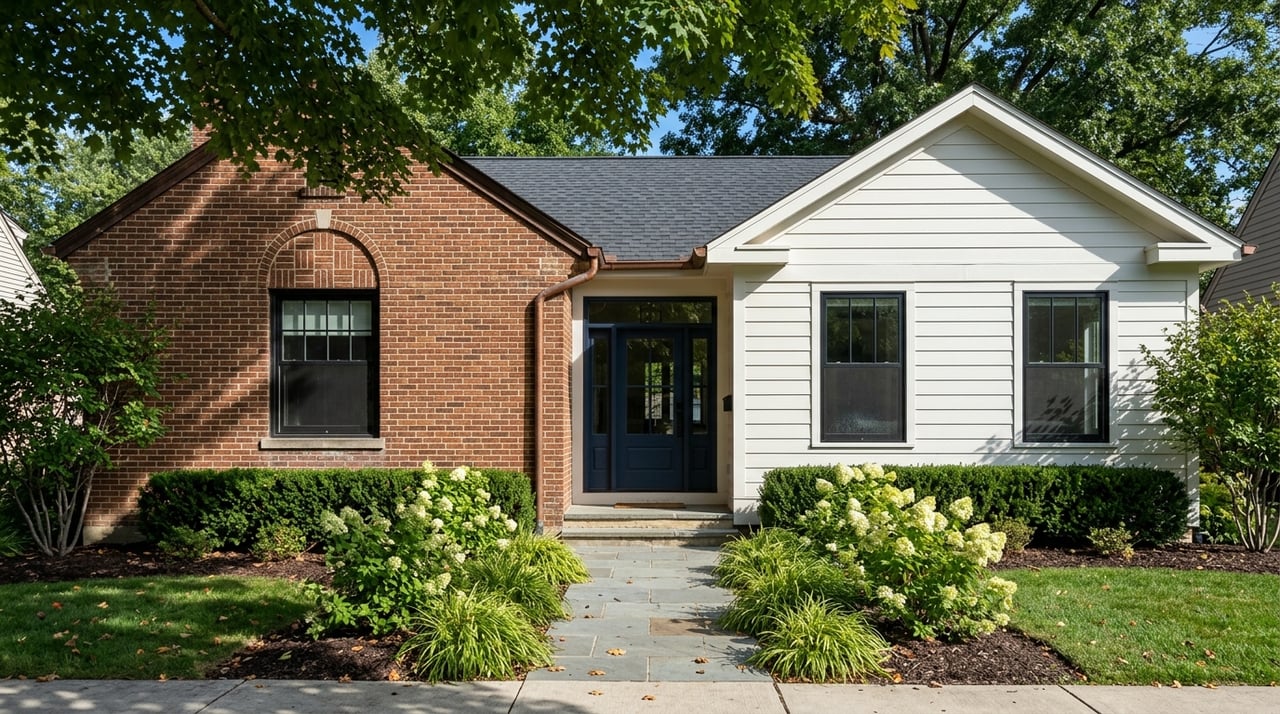
So in two weeks, builders bought four houses in the same price range as households who bought a house to live in. That overlap explains a lot about Elmhurst's housing market. Many of the older, moderately priced homes here are also building lots. A buyer shopping that tier is competing with builders, and the citywide median mixes two markets that move for different reasons.
Builders show up in the transfer records again and again
The September 2025 purchases were not a one-off. Here are the builder and developer purchases that appear in recent Daily Herald transfer columns for Elmhurst.
| Address | Sold | Price | Buyer named in the record |
|---|---|---|---|
| 3N446 N. Howard Ave. | July 24, 2025 | $350,000 | Newgen Homes LLC |
| 468 N. Highland Ave. | Sept. 16, 2025 | $315,000 | McKenna Homes Inc. |
| 224 E. May St. | Sept. 19, 2025 | $750,000 | T.E. McKenna Builders Inc. |
| 220 N. Geneva Ave. | Sept. 12, 2025 | $505,000 | McKenna Homes Inc. |
| 234 E. Grantley Ave. | Sept. 24, 2025 | $370,000 | McKenna Homes Inc. |
| 265 N. Highview Ave. | Sept. 25, 2025 | $425,000 | McGovern Builders Inc. |
| 634 S. Spring Road | April 20, 2026 | $465,000 | Modern Developers & Remodeling |
A transfer record names the buyer. It does not say what happens to the house afterward, so some of these may have been remodeled rather than torn down. McKenna Homes is direct about its model on its own website. It builds custom homes in Elmhurst and nearby suburbs, and it also advertises that it buys homes as-is for a quick cash sale.
Six of the seven purchases in the table cost less than $604,000, which was Elmhurst's median sale price for 2025 according to the city's 2026 housing report. Builders are not buying at the top of the market. They are buying at the entry level.
Why the lot price sets the floor
The city's housing report shows how steady the teardown pace has been. From 2020 through 2024, Elmhurst averaged 78 residential demolitions a year, 389 in total. That replaced 3.1% of an estimated 12,639 single-family homes in five years. The report says demolitions and new builds were most common near the Prairie Path and City Centre. They also happened north of North Avenue and near Butterfield Road.
The same report says older homes make up Elmhurst's moderately priced ownership stock. It notes that starter-home buyers, downsizers and families planning to tear down and rebuild all compete for those homes. The report gives a figure for one group of those homes. Census estimates put the median value of homes built in the 1950s at about $326,200 in 2013 and about $467,900 in the 2019-2023 survey period.
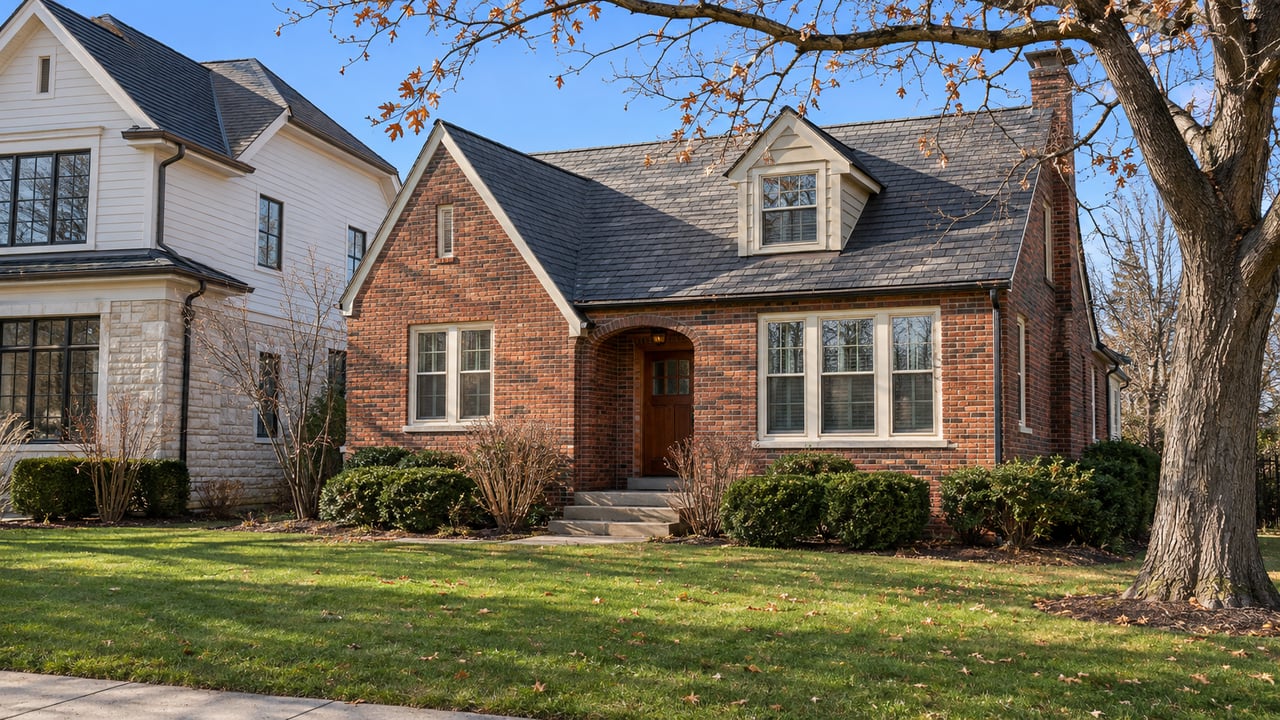
The builder purchases in the table cluster around that $467,900 figure. A 1950s ranch on a good Elmhurst block now has two possible buyers. A household values the house. A builder values the land under it, plus what a new house on that land will sell for. When the builder's math works, the builder's number becomes the floor for the house, whatever the kitchen looks like. This helps explain why modest older homes here have kept appreciating. Their price follows the value of the lot, and the condition of the house matters less.
What gets built, and what it does to the average
The replacement houses sell for much more. In March 2026, a resident of South Hillside Avenue in Elmhurst's southwest corner told the City Council that his block had seen 10 teardowns in six years, with two more expected. He described the new homes there as $1.5 million houses, according to Patch's report on the meeting. The $1.5 million is his description of the block, not a recorded sale. Set beside the $315,000 to $505,000 that builders paid in September 2025, it still shows how wide the spread between the lot and the finished house can be.
Elmhurst's own figures show that gap. Patch reported in March 2026 that Elmhurst's average sale price had reached $761,000, up from $410,000 five years earlier. In his 2026 State of the City address on Jan. 22, Mayor Scott Levin said the average sale price had risen nearly 50% over the past five years. Compare that $761,000 average with the city's $604,000 median for 2025. When the average sits that far above the median, a smaller group of expensive sales is pulling it up. With about 78 demolitions a year in 2020 through 2024 and new homes going up in their place, finished new construction is a likely part of that upper group.
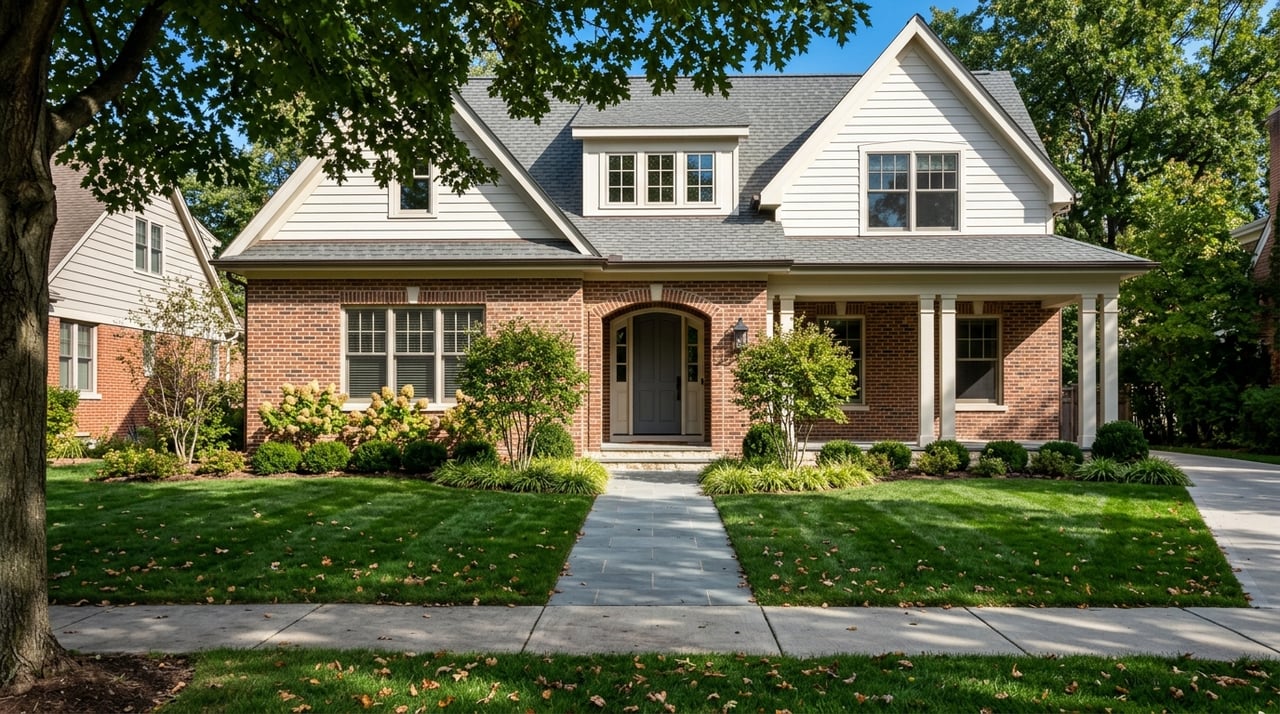
So a buyer comparing Elmhurst with Hinsdale or La Grange should know that "the Elmhurst price" covers two products. One is the older house that a builder might also bid on. The other is the new house that a builder already finished.
Why one month's median can mislead
Because Elmhurst sells both products, its monthly median swings with whatever mix happened to close that month. Mainstreet Organization of REALTORS reported in August 2026 that Elmhurst's median sale price for detached homes fell 16.8% in July 2026 compared with July 2025. In the same release, the suburban Chicagoland detached median rose 7% over the same period, to $450,000. In a city where recorded sales run from $315,000 builder purchases to new homes described at $1.5 million, the median for any one month depends heavily on which of those houses happened to close. A single month's figure is a weak guide to what an Elmhurst house is worth.
For a regional benchmark, Illinois REALTORS reported a nine-county Chicago metro median of $385,000 for September 2026, with 14,837 homes for sale. Elmhurst's 2025 median of $604,000 was well above that. Even so, six of the seven builder purchases in the table cost less than the city median, so the entry level in Elmhurst sits much closer to the regional numbers than the headline figure suggests.
The blocks where this has been argued over
The teardown cycle has a long public history in Elmhurst, and buyers looking at the older streets near the center of town will run into it. In 2024, a nearly century-old house on South Arlington Avenue sold for about $2 million to a buyer who planned to replace it with a new home. A neighbor told Patch that a 2010 city study had identified 28 architecturally significant houses on Arlington and Kenilworth avenues, and that nine of them had since been demolished. By June 2025, Patch reported, the house had been demolished, the lot was still vacant and plans for a new house were under review. The fight also renewed the local preservation movement. Preserve Elmhurst counted 268 houses in the city built in 1925 to mark their centennials.
Teardowns have also come up in the city's own planning. In the community survey for the 2026 housing report, 229 respondents asked for fewer teardowns, the second most common request, behind only more affordable housing. The report recommended that the city evaluate its demolition fee, which was $2,416 per teardown at the time. Separately, the City adopted a comprehensive rewrite of its zoning ordinance on July 20, 2026. Anyone planning a build or a major addition should start with the current ordinance text and the City's planning staff.
What this means for buyers comparing Elmhurst
Shoppers in the older, sub-median tier may find a builder among the other bidders, especially on streets near the Prairie Path and City Centre where rebuilding has been most active. At least one active Elmhurst builder advertises that it buys homes as-is for a quick cash sale, so a dated kitchen does not put off every bidder. When an older house gets a stronger response than its condition seems to justify, the lot may be what the bidders are paying for.
New construction carries the price of the old house that stood on the lot. The builder purchases in the table ran from $315,000 to $750,000, and five of the six September 2025 purchases came in at $505,000 or less, which gives a rough sense of that starting cost.
For comparing towns, Elmhurst's citywide median and average work only as broad markers. Recent sales of the same kind of house on comparable blocks say more.
A few questions buyers ask
Does a builder purchase in the records mean the house was torn down? No. A transfer record names the buyer and the price. Some builders remodel and resell, and some hold a property for a while. The street itself shows what happened afterward.
Where has rebuilding been most concentrated? The city's 2026 housing report puts the most demolitions and new builds near the Prairie Path and City Centre, with more north of North Avenue and near Butterfield Road.
Is the Elmhurst median a good way to compare it with nearby towns? Only roughly. Elmhurst's sales mix older homes with new builds, so its median can move a lot from month to month, as the July 2026 figure showed. Comparing the same kind of house on similar blocks gives a better picture.
If you're weighing an older Elmhurst house against a new one, or wondering how a builder would value the lot you already own, sit down with Ginny Stewart and our team. Schedule a Private Consultation and we'll look at the recent Elmhurst sales closest to the house you have in mind.